Copy First, Ask Questions Later: The American Artists Learning Harada's Lines Stroke by Stroke
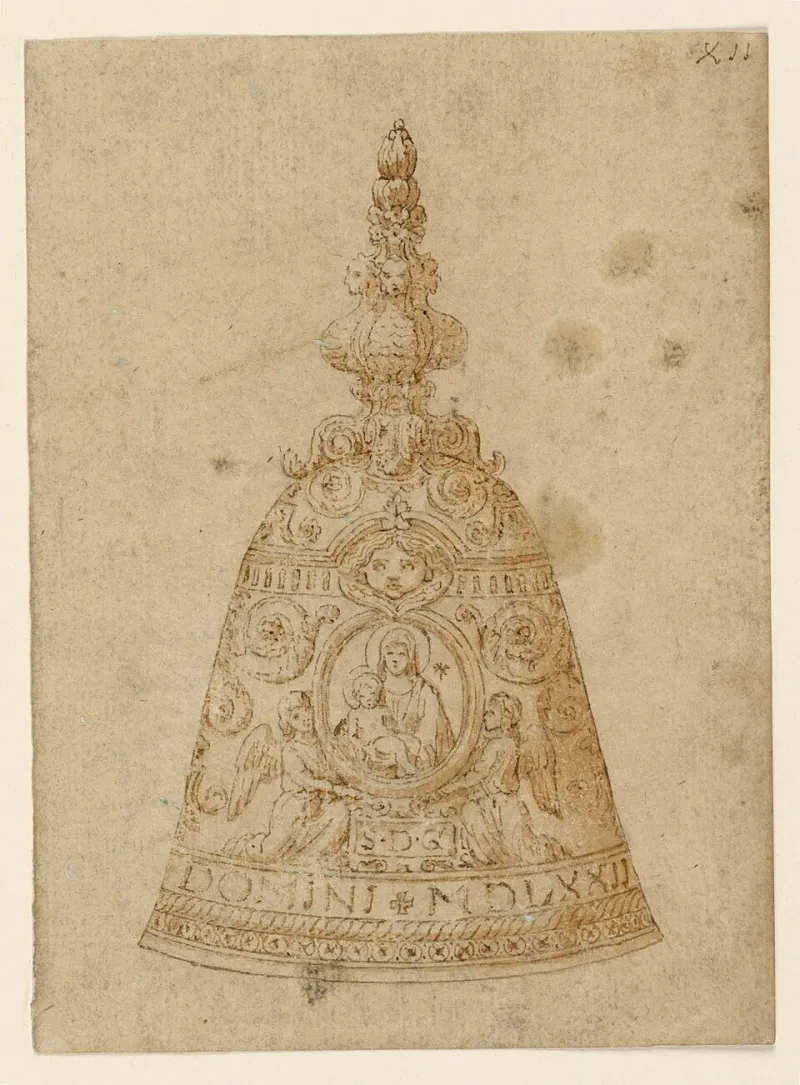
Photo: Unknown artistUnknown artist, Public domain, via Wikimedia Commons
There's a particular kind of silence that happens when an artist slows down enough to really study another artist's line. Not the silence of boredom — the silence of concentration. Ask anyone who's spent a weekend trying to redraw a single Harada Masayuki panel from memory, and they'll tell you the same thing: you don't understand a line until you've failed to reproduce it.
Across the United States, a small but dedicated community of illustrators and art students has been doing exactly that. They trace his stroke order. They argue in Discord servers about his pen pressure. They fill sketchbooks with studies that will never see the light of day — and they say the practice has reshaped how they think about drawing itself.
Why Copy at All?
Formal training in American art programs tends to emphasize concept, voice, and originality — sometimes at the expense of craft. For many of the artists we spoke with, copying Harada's work started as a rebellion against that gap.
"I graduated from a BFA program in Illinois and I still couldn't control a line the way I wanted to," says Dana Okafor, a freelance illustrator in Chicago. "My professors talked a lot about 'finding my voice.' Nobody ever sat me down and said, here's how you make a line that feels alive. Harada's work did that. I copied it the way musicians copy solos."
That comparison comes up constantly. Jazz students transcribe recordings. Classical pianists play Chopin études. But in visual art, especially in the US, direct copying carries a whiff of taboo — the fear of being called derivative. Harada's students-turned-admirers have made peace with that fear a long time ago.
Three Artists, Three Discoveries
Dana Okafor — Chicago, freelance illustrator. Okafor spent eight months on a single exercise: recreating one Harada piece every week, using only the tools she thought he'd use. "The biggest thing I learned was pacing," she says. "Harada doesn't draw at one speed. Some strokes are confident and instant. Others crawl. When I slowed my own hand down to match, I realized I'd been rushing everything — backgrounds, faces, all of it. Copying his rhythm fixed something four years of school never touched."
Marcus Bell — Portland, storyboard artist. Bell came to Harada through animation-adjacent circles and stayed for the economy of the line. "Every stroke in his work is doing a job," Bell explains. "There's no decoration. When I storyboard now, I ask that question constantly — is this line earning its place? It changed how fast I work and how clean my boards read. My director noticed before I told him why."
Priya Raman — Austin, art student. Raman, still in school, uses Harada studies as a warm-up ritual. "Ten minutes of copying before I start my own work. It's like scales." What surprised her most was the negative space. "I used to think of empty areas as unfinished. His work taught me they're decisions. Some of the most deliberate parts of his compositions are the parts where nothing happens."
Where Imitation Ends
Every artist we spoke with eventually hit the same wall — the moment when copying stopped teaching and started constraining. The interesting part is what they did next.
Okafor describes it as "the day I noticed I was fixing Harada." A composition she was studying felt wrong to her, and she adjusted it without thinking. "That's when I knew my own instincts had shown up. The studies did their job."
Bell puts a finer point on it: "Imitation is scaffolding. You build with it, then you take it down. If it's still standing five years later, you didn't learn — you hid."
Raman, the student, is still in the copying phase, and she's fine with that. "Harada himself absorbed a hundred influences before he became Harada. I figure I'm allowed the same courtesy."
A Community Without a School
What makes this phenomenon distinctly American, perhaps, is its structure — or lack thereof. There's no formal workshop, no syllabus. Knowledge travels through YouTube breakdowns, subreddit threads, and the occasional convention meetup where two people discover they've both been quietly filling sketchbooks with the same studies.
Some of these artists have begun sharing their practice pages publicly, annotating what they noticed about stroke order and ink flow. The result is a grassroots, peer-taught curriculum built entirely from close looking — a school with one absent professor who probably doesn't know he's teaching.
And maybe that's fitting. Harada's studio has always valued process over polish, the messy middle over the finished product. The Americans copying his lines aren't trying to become him. They're trying to understand him — and in doing so, accidentally understanding themselves.
That, they'd tell you, is the whole point of the exercise.