Read the Shelf, Guess the Page: How Harada's Record Rack Predicts What He's Working On
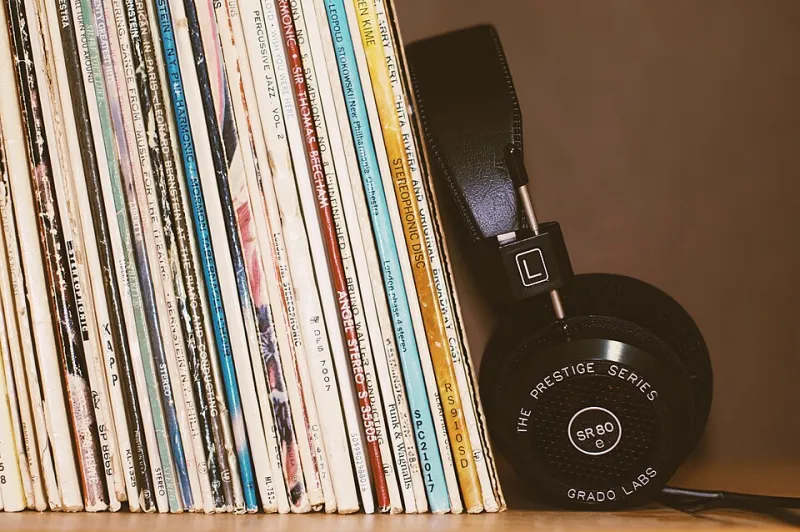
Photo: Mark Solarski marksolarski, CC0, via Wikimedia Commons
If you want to know what Harada Masayuki is working on today, don't ask him. Ask the shelf.
It sits about an arm's length to the left of his drawing desk in his Tokyo apartment — three feet of pressed board, slightly bowing under decades of vinyl and CDs. There's no organizational logic a visitor would recognize. No alphabet, no genre groupings, no chronology. But Harada insists the arrangement makes perfect sense, because the shelf isn't organized by artist or era.
It's organized by task.
The Desk-Side Discography
Harada's system, as he explained it to us while flipping through the rack, comes down to three zones. The top row is for what he calls "quiet hands" work — the days when he's doing precise, detailed linework and needs the room almost silent. The middle row holds his drafting records, the ones that get him moving when a page is still a rough sketch. And the bottom row? That's the color zone, full of louder, warmer records he only reaches for when the ink is dry and the paint comes out.
"The shelf knows before I do," he says with a shrug. "Some mornings I stand here, look at what I'm reaching for, and realize — oh. Today is a detail day."
It's a small ritual, but it's telling. Anyone who has followed Harada's work knows he treats the studio less like a workplace and more like a set of interlocking habits, each one tuned to a different stage of making. The shelf is just the most visible one.
What's Actually on It
The top row leans heavily toward Japanese ambient and minimal piano — the kind of music where a single note can hang in the air for a full minute. Harada says anything with lyrics is banned from this zone, because words "crawl into the line" and make his penwork tighten up.
The middle row is looser: city pop, old film soundtracks, a few American records from the '70s that he picked up secondhand in Shimokitazawa. This is the row for momentum. If he's staring at a blank page at 9 a.m., this is where his hand goes.
The bottom row is the surprise. For color work — the stage most artists treat as the fun one — Harada plays his loudest, most rhythmic records. "Color is physical," he says. "You mix, you test, you commit. I need something with a pulse."
Work Alongside Him
For fans in the States who want to try the system, we've built a companion playlist that mirrors all three zones in order — quiet-hands first, drafting second, color last. Queue it up before you sit down at your own desk and you're essentially working Harada's shift with him, just eight time zones apart.
A few American readers have already told us they've started sorting their own music by task instead of by mood. One fan from Portland wrote in to say the approach fixed a problem she didn't know she had: "I used to pick music based on how I felt. Now I pick it based on what the work needs. It sounds tiny. It changed everything."
Harada would probably nod at that. The shelf, after all, was never really about music.
"Records are just a clock," he told us, sliding an album back into its slot. "They tell me what time of day my brain is having. I just learned to read it."
So the next time a new piece shows up on this site and you wonder what kind of day produced it — check the playlist. The answer is probably in there.