Nine Years in Transit: The Postcard Harada Sent to Nobody
There are faster ways to make a point about patience. Harada Masayuki doesn't use them.
In the spring of 2016, on an ordinary Tuesday at his Tokyo apartment-studio, Harada spent about twenty minutes drawing a postcard. A single image, ink and a couple of muted colors — nothing flashy, nothing that would look out of place among the hundreds of small pieces he's made over the years. Then he addressed it. To himself. To his own studio address. He added a stamp, walked it to the neighborhood post box, and dropped it in without telling anyone.
Then he let it go. No forwarding instructions, no trick, no follow-up. If it never came back, fine. If it came back tomorrow, also fine.
It surfaced again in early 2025.
The Staffer Who Wouldn't Toss the Mail
Here's the part of the story Harada himself couldn't tell you, because he wasn't around to see it happen: the postcard's survival depended entirely on one person's hunch.
The studio is small — deliberately so — and for a stretch of years, a part-time assistant handled the incoming mail. Most of it was the usual pile: invoices, fan letters from overseas (increasingly from the US, where Harada's profile has quietly grown), print vendor catalogs, actual junk. The assistant had a personal rule about anything hand-addressed: it gets opened, always, no matter how beat up it looks.
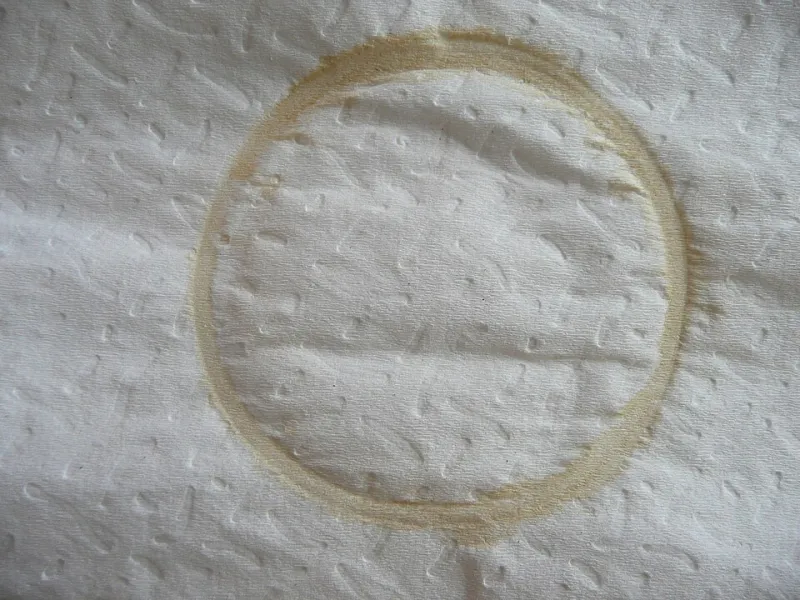
So when a water-stained, corner-battered postcard turned up in a batch of mail sometime in 2025 — no postmark date anyone could confidently read, the ink faded to a whisper of itself — it got opened instead of binned. Only later, after Harada saw the image and went very still for a moment, did anyone realize what they were holding.
"I honestly thought it was a fan piece someone had copied," Harada says. "Then I recognized the paper stock. I only ever bought that brand for about six months."
Why Mail a Postcard to Yourself?
If you've followed Harada's work even casually, the move makes a strange kind of sense. This is a creator whose whole practice is built on small, repeatable rituals: the fifteen-minute rule that gets him past the blank page, the annual single shade of blue, the pigment tin that hasn't left his desk since the mid-nineties. His art lives in repetition and time. The postcard is just that logic taken to its extreme — a ritual with the clock turned up to nine years.
He's cagey about explaining it directly, which tracks. But in a conversation at the studio, he offered a framing that stuck with me: "I make things every day that are finished in a day. I wanted to make one thing that I wouldn't finish. The mail would finish it."
In other words, the postcard wasn't really a postcard. It was a collaboration with the postal system — with sorting machines, transfer hubs, weather, and whatever else nine years of transit throws at a piece of cardstock. Harada drew half the artwork. The route drew the rest.
Patience as a Medium
American audiences have a particular appetite for this kind of slow-art story, and honestly, it's easy to see why. We live in a culture of next-day shipping and same-day answers. A piece of mail that takes nearly a decade to arrive feels almost transgressive — a tiny act of resistance against the entire concept of convenience.
There's also something deeply relatable buried in it. Anyone who's ever started a project, set it aside, and come back to it years later — the novel draft, the half-finished song, the sourdough starter that survived a move — knows the specific disorientation of meeting your own past work. Harada's postcard is that feeling, made physical. When it arrived, he was reading a message from a version of himself who hadn't yet made half the pieces now on this website.
"The drawing was fine," he says. "But I could tell exactly which day I drew it. My line was heavier back then. I was in a hurry about something. The postcard remembered that for me."
Where the Postcard Lives Now
It's not framed. Harada isn't really a framing person. It sits in the same flat file drawer where he keeps the rejection letters, the unsent birthday cards, and the other artifacts of work that didn't go according to plan — the drawer that, more than any finished piece, might be the truest portrait of the studio.
He has, however, made one addition: a small, new drawing on the reverse side, dated 2025. A reply, of sorts. Addressed to no one. He hasn't decided whether to mail it again.
"Maybe in another nine years it comes back," he says with a shrug. "Maybe it doesn't. Either way, I'll be here drawing."
That's the thing about Harada Masayuki's process: the postcard was never the point. The point is that he's still at the desk, still making small things daily, patient enough to let one of them wander the world for a decade before calling it done. The mail took nine years. The waiting, he'd tell you, took no effort at all.