Vinyl Grooves and Ink Lines: Inside the City Pop Ritual That Powers Harada's Studio
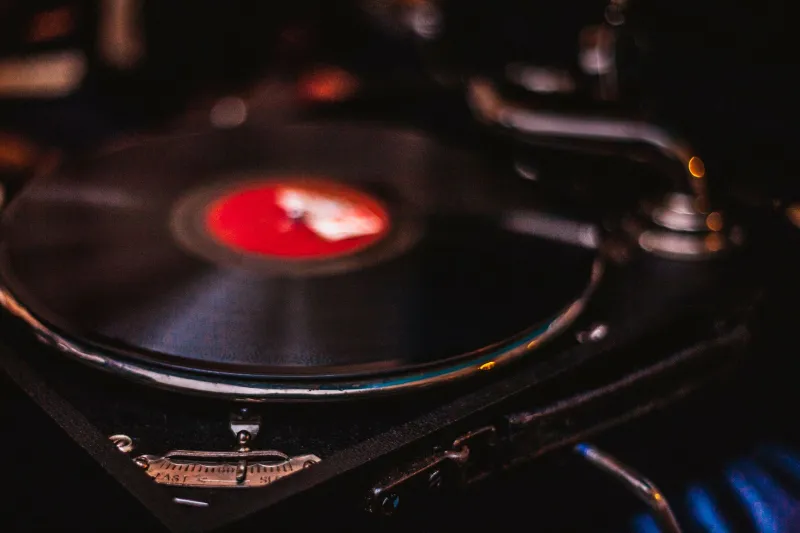
Walk into Harada Masayuki's studio on any given morning and you'll notice something before you see a single drawing: the sound. A warm crackle, then a bassline. Tatsuro Yamashita, probably. Or Mariya Takeuchi's Variety, the record so many American fans discovered through that YouTube algorithm moment a few years back.
The music isn't background noise. According to Harada, it's closer to a metronome — the thing that sets the tempo for everything that ends up on the page.
The Rule: Music Chooses the Mood, Not the Other Way Around
Harada is quick to correct a common assumption. He doesn't pick music to match a piece. He picks a record first, then lets the piece fall in line.
"If I start with silence, I start editing myself," he says. "But if Yamashita is already playing, my hand just starts moving at his tempo. The thinking comes later."
That's why the studio rotates through the same handful of albums: Takeuchi, Yamashita, Haruomi Hosono's solo work, and the assorted studio musicians who defined the Tokyo sound of the late '70s and early '80s. It's polished but playful, nostalgic but forward-looking — which, not coincidentally, describes Harada's artwork almost perfectly.
Why City Pop and Harada's Style Just Click
City pop has had a genuine revival in the US over the last several years, riding a wave of YouTube recommendations, vinyl reissues, and lo-fi playlists. American listeners hear it as "that breezy retro-future Japanese sound" — glossy, a little melancholic, built for a neon-lit drive you never actually took.
Harada hears something more specific. "That era's pop music was made by people who were absorbing everything from America and filtering it through Tokyo," he explains. "My work does the same thing. It's not imitation. It's translation."
That shared DNA — borrowing confidently, then making it local — is why the pairing feels natural rather than gimmicky. The smooth chord changes of a Takeuchi ballad and the clean, confident linework of a Harada illustration come from the same instinct: take something imported, make it unmistakably yours.
The Physical Ritual Matters
Here's the detail that surprised us: Harada doesn't stream. The studio runs on vinyl and, occasionally, a battered CD player for demos and reference tracks.
The reasoning is practical. A record forces a break every twenty-something minutes — get up, flip it, reset your eyes. "It's the same principle as standing up from the desk," he says. "The album side is my timer. When Side A ends, I look at what I've drawn with fresh eyes before I flip it."
It also removes the infinite-scroll problem. No playlists, no algorithm, no skipping. You commit to the record the way you commit to the drawing.
The Studio Playlist: Draw Along at Home
For readers who want to try the Harada method, here's the starter set he recommends — all easy to find on vinyl or streaming:
- Mariya Takeuchi — Variety (1984). Start here. "Plastic Love" gets the headlines, but the deep cuts set a better drawing pace.
- Tatsuro Yamashita — For You (1982). Upbeat, precise, relentlessly melodic. Good for linework days.
- Haruomi Hosono — Philharmony (1982). The weird one. Harada saves this for experimental pieces and pages that aren't going well. "Hosono breaks me out of a rut by being stranger than my problems."
- Tatsuro Yamashita — Ride on Time (1980). For deadlines. No notes.
- Mariya Takeuchi — Sunshower (1979). Moodier, jazzier. Harada's pick for late-night inking.
His one instruction: pick one album, play it start to finish, and draw until it ends. No skipping. If the drawing survives the whole record, it was worth starting.
Sound as a Creative Filter
We've written before about Harada's habits — the fifteen-minute rule, the no-headphones policy (which applies to the studio, not to him), the paper filter for ideas. The city pop ritual fits the same pattern: constraints that protect the work from overthinking.
"Young artists ask me how to find their style," Harada says. "I tell them: your style is what you do while you're not paying attention. Music is how I stop paying attention."
So the next time a piece of yours feels stiff or overworked, don't reach for a new brush or a new tutorial. Reach for a record from 1982, drop the needle, and let the bassline set your pace. The groove, it turns out, works on paper too.