Spill It, Keep It: How a Stained Sheet of Paper Became Harada Masayuki's Most Copied Technique
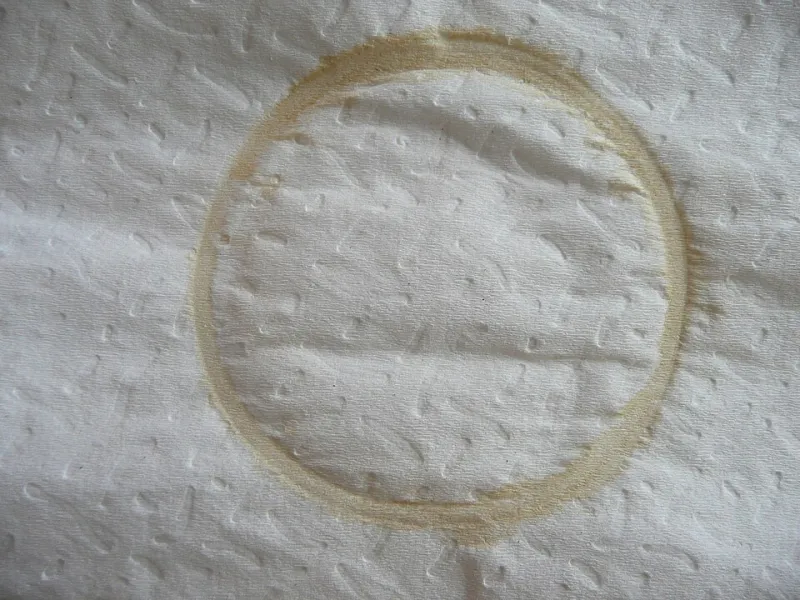
Photo: Nevit Dilmen, CC BY-SA 3.0, via Wikimedia Commons
There's a folder in Harada Masayuki's Tokyo studio that confuses every first-time visitor. It's labeled, in his own handwriting, simply: KEPT.
Inside are pages most artists would have tossed years ago. Coffee rings. Water drips that bled a line of ink into a soft gray bloom. One sheet with a boot print on it — Harada's own boot, from the rainy morning in 2016 when he tracked wet pavement across a finished background painting.
"People ask why I save garbage," he told me, laughing, over a video call. "But none of it is garbage. It's inventory."
The Boot Print That Started It All
The 2016 boot print is the legend around the studio. Harada had spent two weeks on a Tokyo street scene — a rainy evening, neon reflecting off wet asphalt — when the accident happened. Instead of starting over, he studied the smudge. The blurred edge, he realized, looked exactly like motion. Like someone walking through the frame.
He built the final piece around it. The smudge became a blurred passerby, and that piece — Kasa no Naka ("Inside the Umbrella") — went on to become one of his most requested prints among US collectors.
"The mistake knew something I didn't," Harada says. "My hand was doing careful work. The accident was doing honest work."
Why Accidents Feel More Alive
There's a reason this resonates, and it's not just studio folklore. Designers in the States talk about the same phenomenon under different names — the "human touch" in an age of flawless digital rendering. Think of why vinyl outsold CDs for the first time in decades, or why letterpress wedding invitations command a premium over anything a home printer can produce. Imperfection reads as proof that a person was there.
Harada's take is more practical than philosophical. Perfection, he argues, is a style anyone can copy. A specific flaw, owned and repeated, becomes a fingerprint.
The Damage Archive
The KEPT folder has rules, though. Harada is clear that not every mistake deserves a second life:
- It has to be accidental. Deliberately spilling coffee to fake spontaneity, he says, produces work that feels exactly as fake as it is.
- It has to suggest something. A random blot is just a blot. The stain has to earn its place by completing an idea the artist hadn't reached yet.
- It has to be rare. If every piece has a stain, the stain stops meaning anything. Harada estimates only one in twenty finished works carries an accident, which keeps each one legible.
He keeps the folder organized by year, and occasionally flips through old pages looking for unfinished conversations. "Sometimes the accident is ten years early," he says. "A stain from 2015 fits a piece I'm drawing today."
What This Looks Like for American Creatives
You don't need paint water and a careless elbow to apply this. The principle translates to any medium:
Writers: Keep the sentence you almost deleted. The awkward phrasing sometimes carries more voice than the polished one.
Designers: Before you hit undo on a misaligned layer, look at it. Accidental offset layouts powered entire design movements — the Memphis group built a career on them.
Musicians and podcasters: That breath, chair creak, or room echo you're editing out? Listeners consistently describe recordings with those artifacts as feeling more "real."
Photographers: Light leaks, motion blur, dust on the lens — the analog revival in the US market is essentially the KEPT folder, industrialized.
The common thread is a shift in reflex. The default move when something breaks is to fix or discard it. Harada's default is a pause: what did the accident just show me?
The Stain as a Signature
Near the end of our call, I asked Harada whether he worried that celebrating accidents would make them a gimmick — something fans would demand in every new piece.
He thought about it for a long moment.
"A signature isn't something you draw on purpose," he said. "It's something that keeps showing up. The stains show up because I work in a real room with real coffee. If fans love that, they're not loving the stain. They're loving the proof that a person made it."
Then he hung up, presumably to go ruin something beautiful.