Fifteen Minutes, No Excuses: The Tiny Habit That Gets Harada Past the Blank Page
Ask Harada Masayuki about his studio routine and you'll get a shrug. Ask him about the fifteen-minute rule, and he'll actually sit up straight.
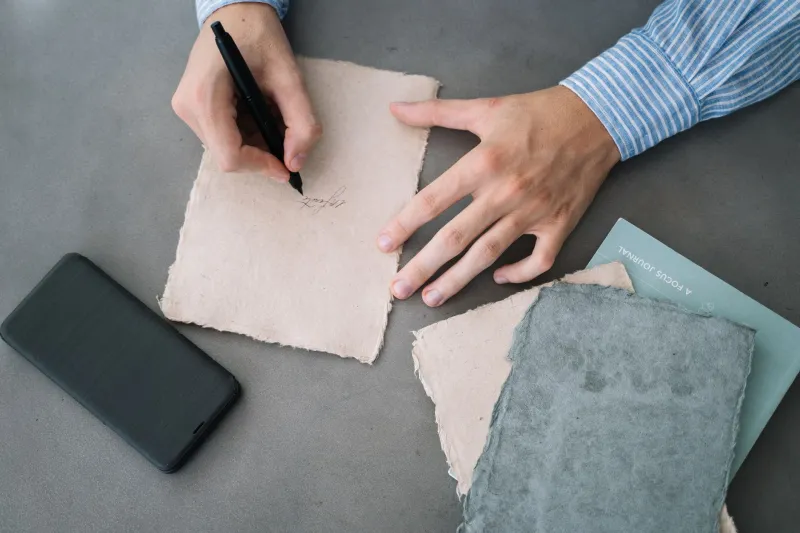
The rule is almost embarrassingly simple: when a new idea arrives, it gets fifteen minutes of actual work that same day. Not planning. Not a Pinterest board. Not a note that says "explore later." Fifteen minutes of making something — a thumbnail sketch, a paragraph, a rough shape, a color test. Same day. No exceptions.
"The idea doesn't care if you're ready," Harada says, laughing. "Ideas show up unannounced, like a neighbor at the door. You wouldn't leave a neighbor standing on the porch for three weeks."
Where the Rule Came From
It wasn't some grand philosophy. In the early days, Harada kept a stack of ideas he'd written down with the full intention of getting to them "when things calmed down." Things never calmed down. When he finally reread the stack, most of the ideas were dead to him — not because they were bad, but because the original spark, the thing that made him want to make them, had faded.
"An idea is a live wire," he says. "Fifteen minutes while it's hot is worth a month of work on a cold one."
So he flipped the system. Instead of a waiting list, a same-day rule. If an idea is worth writing down, it's worth fifteen minutes of your hands.
Why Fifteen Minutes Works When Motivation Doesn't
American creative culture loves the big swing — the retreat, the sabbatical, the "I'll start Monday" energy. Harada's rule is the opposite of that. It's small enough that your inner critic can't mount a real defense.
Think about the projects you've been circling. The novel outline. The podcast. The illustration series you've mentioned to friends four times. The barrier was never time — it's that starting feels like it demands a version of you who is ready, focused, and inspired. That version is always out of town.
Fifteen minutes lowers the stakes so far that readiness becomes irrelevant. You're not committing to the project. You're committing to a coffee break's worth of contact with it. And here's the thing nobody tells you: the rule's real magic isn't the fifteen minutes. It's what happens after. Once you've touched the work, the project stops being an abstract threat and becomes a specific problem — a fun one. Harada estimates that a third of his fifteen-minute sessions turn into two-hour sessions. Another third produce something genuinely usable. The last third produce garbage, which he considers a fair tax.
The Rule Has Teeth
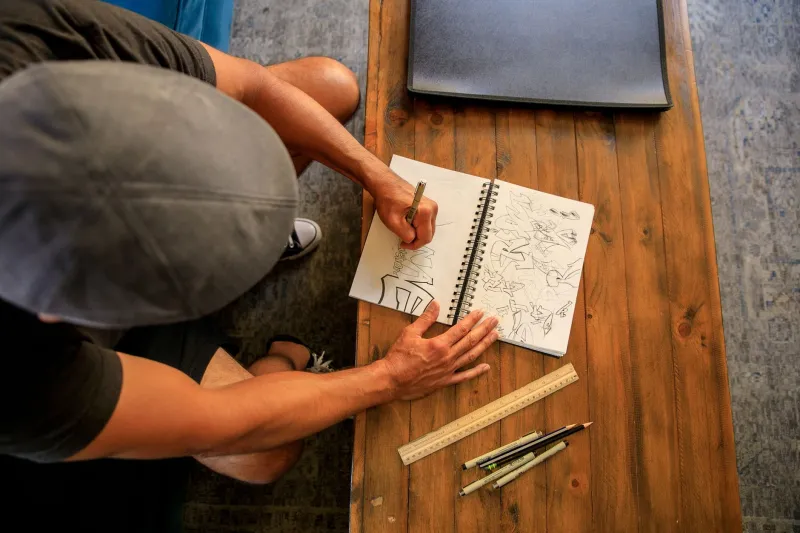
To be clear, this isn't a gentle suggestion in Harada's studio. The same-day part is the discipline. He's done his fifteen minutes in airport terminals, in hospital waiting rooms, on the Yamanote Line with a pocket sketchbook balanced on his knee. Once, he remembers, on New Year's Eve, when he'd rather have done literally anything else.
"The day you skip is the day the rule dies," he says. "It's a muscle or it's nothing."
The no-exceptions clause also kills the sneakiest form of procrastination: preparing to start. Buying the supplies. Reorganizing the desk. Watching one more tutorial. None of that counts. Only making counts.
Stealing the Rule for Your Own Stalled Projects
You don't need Harada's studio, or Japan, or even talent — the rule is agnostic on that front. Here's the American-adapted version:
1. Catch it, touch it. The moment an idea excites you, set a fifteen-minute timer before the day ends. Phone timer, kitchen timer, whatever. Touch the actual work — sketch, draft, record, solder, outline.
2. Define "work" narrowly. No research, no planning, no shopping. If it doesn't produce an artifact — even an ugly one — it doesn't count.
3. Lower the bar to the floor. A bad first sentence. A stick figure. A chord progression with two wrong notes. The goal is contact, not quality. Quality is a later problem with a later rule.
4. Track the streak, not the output. Harada keeps a simple tally on the wall of his studio. Some entries are marked with a small dot meaning "garbage session." He's prouder of the unbroken streak than of any single piece.
5. Let the timer end when it ends. If you want to keep going past fifteen minutes, great — that's momentum, and momentum is a gift. But you never have to. The exit is always right there, which is exactly why the door is so easy to walk through.
What the Rule Actually Protects
When you zoom out, the fifteen-minute rule isn't about productivity. It's about trust. Every time you honor it, you're telling yourself that your ideas deserve immediate attention — that you're the kind of person who shows up for them. Skip it, and the message flips: later, which over years quietly becomes never.
Harada's studio is full of finished work, but ask him what he's most protective of and he'll point to the tally wall. "People think the artwork is the discipline," he says. "No. The artwork is what the discipline leaves behind."
Fifteen minutes. Today. That's the whole system. Your neighbor is at the door.