The Thrill of the Hunt: How American Fans Track Down Harada's Earliest, Rarest Work
There's a moment every Harada Masayuki collector remembers: the first time they pull a faded, stapled zine off a cramped comic shop shelf and realize what they're actually holding. Not a gallery print. Not a nicely bound art book. Just twenty-eight photocopied pages from 1991, corner-curling, coffee-stained, and — somehow — completely alive.
If you've only seen Harada's recent work on this site, the early stuff can come as a shock. The linework is rougher. The layouts break rules he now follows instinctively. And that's exactly why collectors chase it. These pieces are the raw sketchbook of a career — the place where you can watch someone figure out what kind of artist they wanted to become.
Why the Early Work Is So Hard to Find
Harada's first published pieces weren't books in any commercial sense. They were doujinshi — small, self-published runs of a few hundred copies, sold at conventions in Japan and distributed almost entirely by hand. Very few made it overseas in the early days, which means the American supply is whatever travelers, import shops, and lucky thrift-store finders carried over decades.
The result is a scattered, unpredictable market. A zine that sold for 500 yen in Tokyo in 1993 might sit in a Portland comic shop's dollar bin for three years before someone recognizes it. Or it might surface on eBay for $180 on a Tuesday afternoon and be gone by Wednesday.
Where the Real Finds Happen
We asked three longtime American collectors — a librarian in Chicago, a game designer in Seattle, and a bookstore owner in Austin — where their best pieces came from. The answers overlapped more than you'd expect.
Used bookstores with deep manga sections. Not the big chains. We're talking about the shops that have been buying estate collections since the '90s — places like the long-standing manga rooms in New York, LA's Little Tokyo bookshops, and independent stores in cities with big Japanese communities. Ask the staff. Harada's early work has no barcode, no ISBN, and often no English text at all, so it hides in plain sight unless someone's actually looking.
Online marketplaces, with caveats. eBay and Mercari turn up pieces regularly, but the collectors we spoke with all said the same thing: search by Japanese titles, not the romanized name. Harada's name gets spelled a dozen different ways in listings, and the misspellings are where the underpriced gems live. Set saved searches and be patient.
Proxy services for Japanese auctions. When the American well runs dry, Yahoo! Auctions Japan via a proxy service like Buyee or ZenMarket is the next stop. Shipping and fees add up fast — budget roughly double the auction price — but this is where complete runs of early anthologies surface, often in better condition than anything that survived the trip to the US in a suitcase.
What Fair Prices Look Like
Based on what our collectors have actually paid over the past five years:
- Single early zines in decent condition: $25–70
- Milestone pieces (first appearances, notable anthology contributions): $100–250
- Complete or near-complete early runs: $400 and up, and worth every penny to the people who pay it
The big warning: condition matters enormously, and these were never built to last. Sun-faded covers and brittle staples are normal. Reprints and later printings of early zines do exist, so check the colophon page — the small print block near the back — for the printing date before you celebrate.
Spotting a Bootleg
Harada's early work has been scanned, reprinted, and sold without permission more than once, usually as glossy "collection" volumes on print-on-demand sites. The tells are consistent: modern binding on decades-old content, missing colophon pages, and prices that are suspiciously reasonable for something supposedly rare. When in doubt, compare against photos from established collector communities, or ask directly — the Harada collecting scene is small, and people are genuinely helpful.
Why Bother?
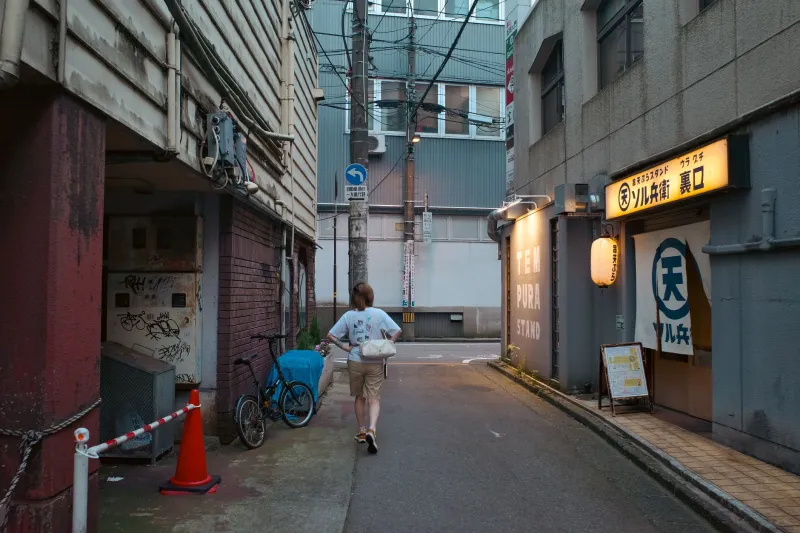
Here's the thing all three collectors said, in slightly different words: hunting down Harada's early work isn't really about owning paper. It's about understanding the throughline. When you flip from a 1992 zine to a recent piece on this site, you can see the same obsessions — ordinary places, small gestures, images that stick — being refined across thirty years.
The collection becomes a creative timeline you hold in your hands. And unlike the big art books, every piece in it has a story about how it got to you.
Happy hunting. And if you find something in a dollar bin that turns out to be the real thing — tell us. We keep a running list.