Ordinary Places, Lasting Images: The Tokyo Spots Behind Harada's Signature Look
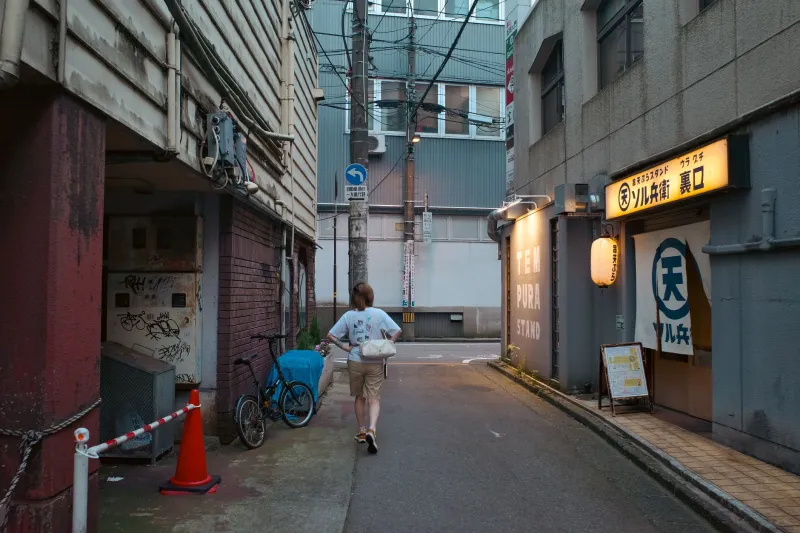
Ask Harada Masayuki where his visual style comes from and he'll deflect — mention other artists, shrug, change the subject. But spend enough time with his catalog and you start noticing repeats. A particular tile pattern. A certain quality of dim light. A stairwell that appears, slightly altered, in at least four separate pieces.
Those repeats aren't coincidence. They're places. Real ones, all within a few train stops of his studio. We walked to five of them, camera in hand, and paired each location with the artwork it left behind.
1. The Shuttered Arcade Behind the Station
First stop: a game center two blocks from the Yamanote line, closed for over a decade but never demolished. The signage is sun-bleached to a pale pink, and the crane games inside are visible through dusty glass like a museum nobody visits.
This place shows up constantly. The flickering half-light, the rows of glowing cabinets, the strange loneliness of an entertainment space with nobody in it — it's all over Harada's city scenes. Compare a photo of the shuttered entrance with his 2017 piece of a lone figure before a wall of screens and the lineage is unmistakable. He didn't draw an arcade. He drew this arcade, distilled.
2. The Stationery Shop That Refuses to Modernize
Tucked down a side street in old Kagurazaka, this family-run shop still sells individual pens from wooden drawers. No website. No card reader for years.
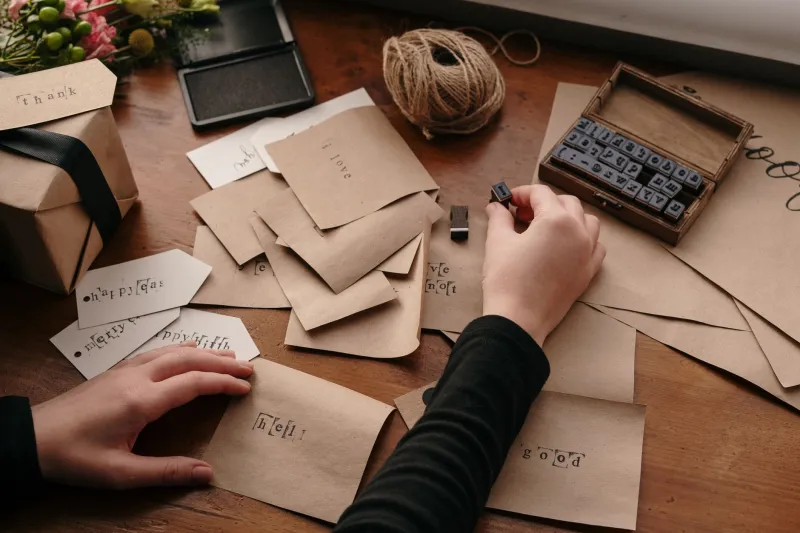
Harada buys his ink here, and the shop's DNA runs through his entire approach to materials — the flat color blocks, the love of paper texture, the way his compositions feel assembled rather than rendered. Look at his hand-bound zines next to the shop's drawer of washi samples and you'll see the same palette. Some influences you look at. This one he literally touches every week.
3. The Apartment Stairwell
This is the famous one among longtime fans. A narrow, windowless stairwell in a 1970s apartment block — peeling paint, a single caged bulb, stairs that turn twice before reaching the landing.
It appears in at least four works, each time with a small change: the bulb brighter, the walls a different shade, once with a cat. Harada calls it "the most honest room I know," and there's something to that. The stairwell is never the subject of a piece — it's the space a character passes through — but it anchors everything. For US readers: think of it as his version of a Hopper staircase, a recurring architecture for solitude.
4. The Crossing With the Broken Signal
A minor intersection where the pedestrian signal has been stuck on blinking red for what neighbors swear is five years. Everyone jaywalks. Nobody reports it.
Harada loves this spot precisely because it's a small, functioning failure — infrastructure that gave up and life that adapted. His street scenes are full of these quiet malfunctions: dead lamps, faded arrows, machines that no longer take coins. The blinking crossing taught him that imperfection reads as truth. Perfect streets look like stock art. Broken ones look like somewhere.
5. The River Path Under the Tracks
Last stop: a strip of walkway where the Chuo line tracks run overhead and a narrow canal glitters below. Trains pass every few minutes, and the light changes with each one.
This is where Harada goes to think, and its fingerprints are everywhere — the overhead geometry, the strobing shadow patterns, the sense of a small human figure inside a machine's rhythm. His most shared piece, the one of a person standing on a path beneath a passing train, is essentially a portrait of this exact view.
Why Place Beats Inspiration
The through-line in all five spots: none of them are scenic. No landmarks, no postcard views. Harada's visual world isn't built from grand sights but from ordinary places seen long enough to become his own.
That might be the most useful takeaway for any artist reading this. Your signature style probably isn't hiding in a museum or a mood board. It's in the stairwell you climb every day, the corner you cross without thinking. Go back with a camera. Look longer. That's where the work is.