A Whole Day With Nothing but an Eraser: Inside Harada's Subtraction Ritual
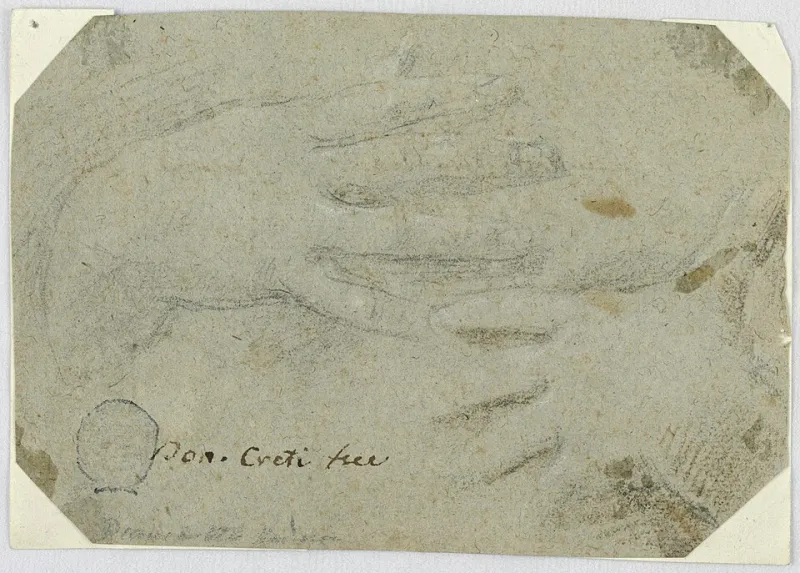
Photo: Unknown artistUnknown artist, Public domain, via Wikimedia Commons
There's a moment in every visit to Harada Masayuki's studio that first-time guests don't see coming. The drawing on the table looks nearly done — linework confident, composition locked. And then Harada picks up an eraser, sits down, and removes things. For hours. Sometimes for an entire day.
He calls it "the eraser day," and it's the least glamorous, most guarded stage of his process. No new lines. No ink. No fixes. Just subtraction, until the piece tells him it's finished.
One Tool, One Rule
The rule is simple enough to sound like a joke: on eraser day, the pencil doesn't leave the drawer. Harada says the constraint is the point. "When you can only remove, you stop defending your work," he told me through a translator, laughing. "Every mark has to argue for its place, because I'm coming for the ones that can't."
The origins are surprisingly practical. In the mid-1990s, a client rejected a poster Harada loved, calling it "crowded." Instead of redrawing it, he spent a frustrated afternoon erasing elements one by one — and discovered the piece got stronger with every removal. The habit stuck. Thirty years later, a full day of erasing is non-negotiable before anything he signs.
What the Scans Show
Harada's archive includes paired scans — the morning state and the evening state of the same sheet — and the differences are striking. Background figures vanish. A cluttered sky becomes three lines and open paper. In one 2019 cityscape, an entire storefront was erased, and the piece instantly felt calmer, more like memory than documentation.
What's interesting is what he doesn't erase. Faces stay. Hands stay. The focal point of a composition is almost never touched. The eraser day, it turns out, isn't about doubt — it's a stress test that confirms what the drawing is actually about. Everything that survives the day earned its spot.
The American Classroom Catches On
The ritual crossed the Pacific the way most of Harada's process knowledge does: through fans, then educators. Dana Whitfield, who teaches illustration at a community college outside Columbus, Ohio, encountered the concept on this very site and started running "eraser Fridays" with her students. "They panic at first," she says. "Then they realize half of what they drew was them hedging. By the third week, they're begging for more erasing time."
In Portland, high school art teacher Marcus Lee has adapted it as a critique exercise: students swap boards and are allowed only to erase from each other's work. "It teaches restraint better than any lecture I've ever given," Lee says. "You learn what's essential by what you're afraid to take away."
Neither teacher assigns it as punishment. Both describe it the same way Harada does — as a filter, not a fix.
Why Subtraction Scales
Part of why the eraser test resonates with American audiences might be how counter it runs to our instincts. We're a culture of additions — more polish, more features, more layers. Harada's day of removal is almost a philosophical stance: quality isn't what you put in, it's what you're willing to take out.
He's quick to reject the mystical framing, though. Asked if erasing is his favorite part of the process, he shakes his head. "It's the honest part," he says. "The pencil is where I flatter myself. The eraser is where I find out the truth."
For artists reading this who want to try it: Harada's only advice is to give the day a hard stop. Don't erase past the point of the piece's identity. When the drawing still looks like itself — just quieter — put the eraser down. That's the test passing.