The Whole Studio Is One Room: A Floor Plan Tour of Harada Masayuki's Tokyo Apartment Empire
Ask most American creatives what 'scaling up' looks like and they'll describe the same picture: a rented studio space, a part-time assistant, a podcast about hustle, maybe a second location if things go really well. Ask Harada Masayuki what scaling up looks like and he'll point at the kitchen.
That's not a metaphor. For over thirty years, Harada's entire operation — the artwork, the projects, the business, the archives — has lived inside a modest apartment in Tokyo. No office. No warehouse. No team meeting on the calendar. Just one room doing the work of an entire company.
The Tour: Six Mats, One Desk, Zero Waste
Harada's apartment is small by American standards — the kind of space a New Yorker might call a studio and a Tokyo native calls Tuesday. The layout breaks down into zones, though you'd never see a wall between them.
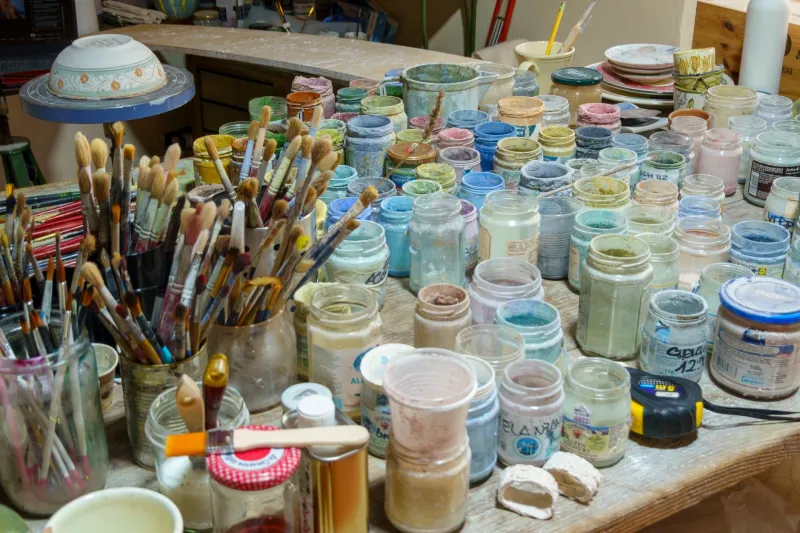
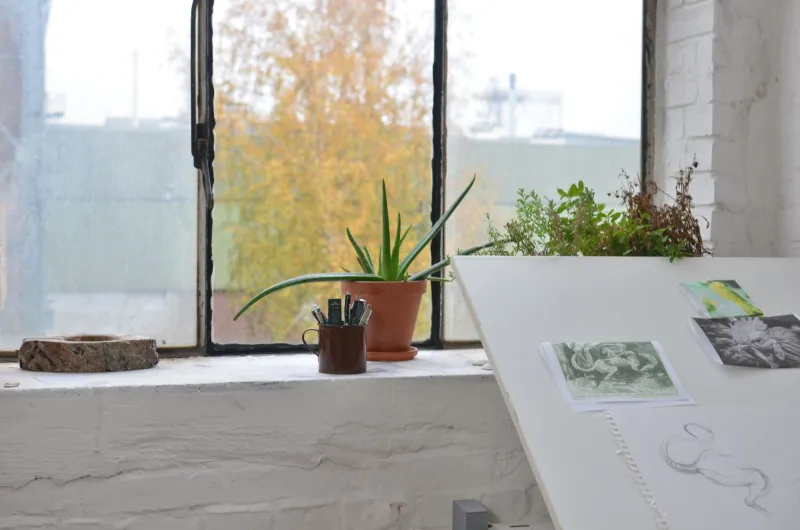
The drawing table sits by the window, positioned to catch morning light. It's a solid, unglamorous desk that has outlived several chairs. Beside it, a single shelf holds the pigment tins and tools he's refused to replace for decades — the man has a 1994 tin that's seen more working days than most careers.
The kitchen counter doubles as a packing station. When originals ship to collectors in the US or Europe, they're wrapped on the same surface where breakfast happens. The closet holds flat-file drawers of finished work and, famously, a shoebox of rejection letters he keeps for reasons that are entirely his own.
That's it. That's the empire.
The Economics of Not Expanding
Here's where it gets interesting for anyone stateside staring down a $800-a-month studio rental.
Harada's overhead is roughly what yours might be if you worked from home and were disciplined about it: rent, utilities, materials, and the occasional train ticket to scout a location. No commercial lease. No payroll. No insurance policy covering a space full of expensive equipment.
The math compounds over decades. Every dollar not spent on overhead is a dollar that buys time — and time is the only real currency of a creative career. Harada can turn down work that doesn't fit on one page, metaphorically and literally, because he isn't feeding a machine that demands constant revenue. His famously small operation, kept that way through a decades-old handshake understanding, exists because small means free.
Compare that to the American default: land a few commissions, immediately rent a studio, hire an assistant, and spend the next five years drawing just enough to cover last month's studio rent. It's a treadmill, and plenty of talented people have fallen off it.
What One Room Forces You to Learn
Working in a single room isn't just cheaper — it changes the work itself.
There's nowhere to hide from a project that isn't going well. The unfinished pages sit in plain sight, which is partly why Harada's 'messy middle' work became such a draw. There's no separate room where problems go to be ignored.
There's also a hard limit on accumulation. When your studio is your home, every new tool has to justify the space it takes. Harada's gear list is short because his floor plan is short. Necessity, it turns out, is a great editor.
And there's the commute, or total lack of one. Harada's ideas show up early in the morning, and the distance from bed to drawing table is measured in steps, not highway miles. The famous pre-dawn hours happen because the studio is never closed and never more than a hallway away.
Lessons for the Stateside Creator
You don't have to move into a Tokyo apartment to steal the logic. A few takeaways translate directly:
Delay the office. A commercial studio is a luxury, not a milestone. If the work is good in your spare room, it'll be good in a loft with exposed brick.
Let constraints pick your tools. One shelf's worth of materials forces decisions. Decisions force style. Style is what people actually collect.
Keep the handshake small. Growth for its own sake is overhead with better marketing. Harada's collaborations work because they're few, personal, and don't require a project management app.
Let the room shape the rhythm. When your workspace is always there, the work weaves into your life instead of competing with it. Some of Harada's best pages exist because the table was ten feet away at 3 a.m.
The Whole World in One Room
There's a temptation to read Harada's setup as a cautionary tale of staying too small. Spend any time with the work and you'll read it differently. Thirty years of output, a global audience of collectors, a body of projects that refuses to specialize — all of it produced from six mats and a window seat.
The empire isn't small. It's just concentrated. And for American creators drowning in overhead and the pressure to look bigger than they are, that might be the most valuable piece Harada Masayuki ever made: the room itself.