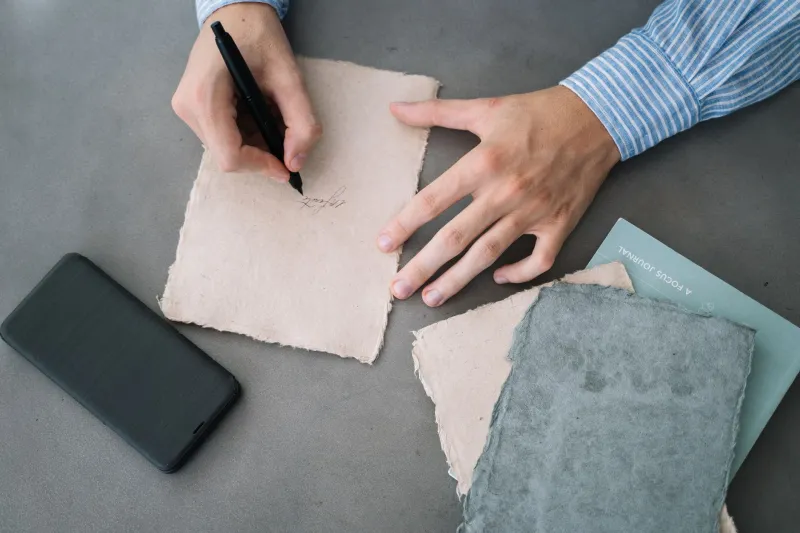
Thirty Years of 'No': The Shoebox of Rejection Letters Harada Refuses to Throw Away
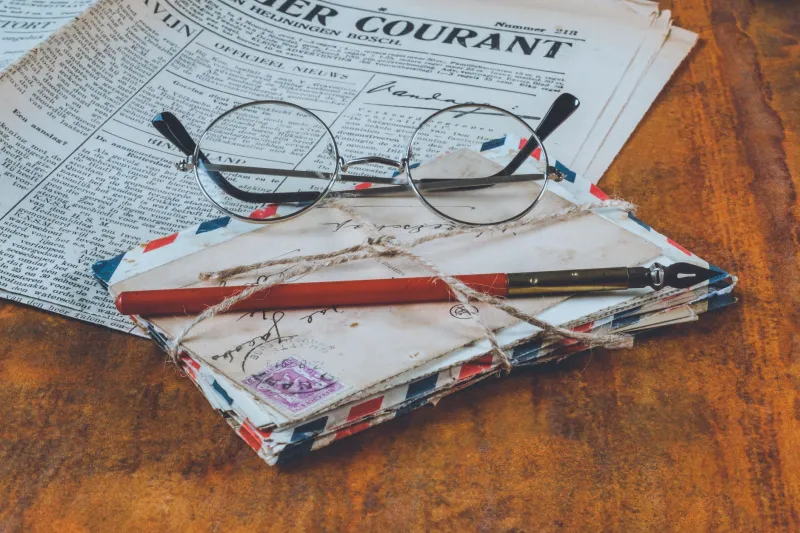
There's a beat-up cardboard box in the corner of Harada Masayuki's studio that most visitors never ask about. It looks like it holds old art supplies. It doesn't. It holds three decades of rejection letters.
Every editor who passed on his work. Every publisher that never wrote back. Every polite form letter with his name misspelled. He kept them all, filed chronologically, and — this is the part that gets people — he still pulls them out sometimes before starting a new project.
"Americans have shoeboxes of family photos," he told me, sliding the box across the table. "I have a shoebox of people telling me I'm not good enough. It's more motivating."
The 1993 Postcard That Started the Collection
The earliest piece of paper in the box is a hand-addressed postcard from 1993, so faded the ink has gone brown. A Tokyo editor thanked Harada for his submission, praised his "clean linework," and then explained — in the gentlest possible Japanese — that the work wasn't right for them "at this time."
"At this time" became a running joke in the studio. Not right at this time. Not right at this time. Fourteen years of not right at this time.
But Harada points out something most creatives miss: that first postcard contained a genuine compliment tucked inside the rejection. The linework was good. The concept wasn't. So he stopped submitting whole concepts and started submitting linework — spot illustrations, small commissions, anything that let him draw without asking anyone to bet on his ideas.
That pivot, he says, was the single most important move of his early career. And it came from a two-sentence postcard that cost about twenty yen to mail.
The Form Letter Era, or: How to Read a Template Like a Fortune Cookie
By the late '90s, the rejections got more efficient. Photocopied form letters with a handwritten signature stamp. Harada has dozens of these, and he swears each one is different in a way that mattered.
"There's a version where they circle the word 'currently' in 'we are not currently accepting submissions,'" he says. "That told me they WOULD accept submissions later. I waited eight months and resubmitted. That one got accepted."
It sounds superstitious, but there's a real skill here that American freelancers especially will recognize: learning to read the temperature of a rejection. A form letter is a dead end. A personalized paragraph is a door left cracked open. A question mark in the margin is basically a handshake.
Harada's advice, translated loosely: stop reading rejections for what they say about your talent, and start reading them for what they say about the door.
The One-Line Email He Still Has Framed (Sort Of)
Then there's the email. Printed out, folded in half, kept in a plastic sleeve like a collectible card.
It's from 2009. Subject line: "Re: submission." Body: "No."
That's it. One word. No feedback, no pleasantries, no closing.
"I was furious for a week," Harada admits. "Then I realized this editor had done me the biggest favor of my career. He didn't want a different version of what I sent. He didn't want a revision. He wanted me to stop sending that kind of work entirely. So I asked myself: what would I make if I never sent it to anyone?"
What he made instead was personal, strange, and unmarketable — the kind of work that eventually became the foundation of this very site. The stuff nobody rejected, because he never asked permission to make it.
The email stays in the box as a reminder. Some 'no's aren't about the work. They're about the fit, the timing, the editor's bad morning. And one of them, at least, was about freedom disguised as rudeness.
What the Whole Box Adds Up To
Spread the letters out on a table and a pattern emerges that no single rejection could show: the 'no's never stopped. Not in 1993, not in 2009, not last spring. There is no year where Harada "made it" and the rejections ceased.
That's the actual lesson of the shoebox, and it's a stubbornly hopeful one. The goal was never to stop hearing 'no.' The goal was to build something so much yours that a 'no' couldn't take it from you.
Harada's parting advice for the American creatives who email this site: keep your own box. Not out of bitterness — out of evidence. Evidence that you kept going, that you read the doors correctly, that 'no' was never the final word because you were the one holding the pen.
And when you finally get that big 'yes'? He has instructions for that too.
"Put it in the box with the rest. It's just another letter. The box is the career. The letters are just the mail."