Lost in the Translation: The Japanese Words That Explain How Harada Actually Works

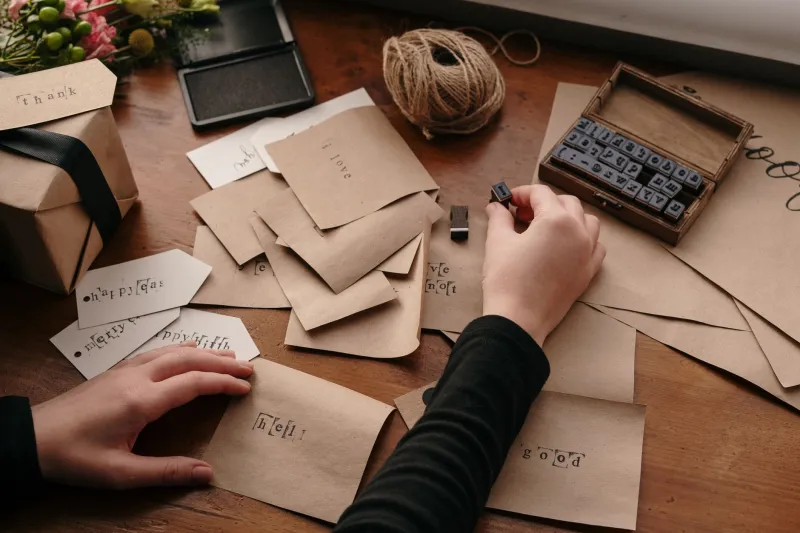
Photo by Photo by Lu Neil on Unsplash on Unsplash
Spend enough time around Harada Masayuki's studio and you'll notice something: when the conversation gets serious about the work, he switches languages.
It's not affectation. It's not gatekeeping. It's that the words he reaches for — the ones that capture what he's actually doing — simply don't have clean English equivalents. Machine translation butchers them. Bilingual fans approximate them. And Harada, to his credit, finds the whole thing kind of funny.
"Every language has rooms that other languages can't enter," he told me. "These words are some of my rooms."
Here are five of them, what they mean in his studio, and why American audiences keep responding to work shaped by ideas they've never had a name for.
1. 間 (Ma) — The Power of the Gap
Ma is usually glossed as "negative space" or "pause," but in Harada's usage it's more active than that. It's the deliberate emptiness in a composition — the breath between panels, the untouched paper around a figure — treated as a designed element, not leftover territory.
American design education teaches negative space as a technique. Harada talks about ma as a presence. "The empty part is working too," he says. "It's holding the loud parts up." Once you know to look, you can see it everywhere in his compositions: the moments where he declines to draw, and the drawing is stronger for it.
2. 微妙 (Bimyou) — The Almost-Right
There's no perfect English word for bimyou. It can mean "subtle," "delicate," "questionable," or "meh," depending on context. In the studio, Harada uses it as a diagnostic: a line, a color, a gesture that's almost right but registers some quiet wrongness he can't yet articulate.
"Bimyou is the most useful word I have," he says. "Before I know what's wrong, I know it's bimyou. The word buys me time." For American readers used to binary feedback — works/doesn't work — the idea of a professionally sanctioned "hmm, not quite" is quietly liberating.
3. 侘び寂び (Wabi-sabi) — Beauty in the Incomplete
Yes, wabi-sabi has been imported into Western wellness culture and sanded down into a lifestyle brand. Harada's version is less tea ceremony, more working method. He actively resists over-finishing. A piece is done when it still shows its seams — the visible correction, the uneven edge, the evidence of a human hand making decisions in real time.
"If I polish everything smooth, the viewer has nothing to do," he explains. "The imperfection is a door. They walk through it and finish the piece themselves." That philosophy may explain why his work lands so strongly with US audiences raised on hyper-produced media: the roughness reads not as a flaw but as an invitation.
4. 無駄 (Muda) — Useful Uselessness
Lean manufacturing gave Americans muda as a villain — waste, to be eliminated. Harada uses the word with obvious affection. Studio muda is the experimental mess: the versions that fail, the side paths, the afternoon spent on something that "goes nowhere."
"Companies hate muda," he says. "I collect it." Several of his most-liked projects started as muda — experiments with no destination that circled back years later. The word reframes wasted effort as inventory. You're not failing; you're stocking the shelves.
5. なんかいい (Nanka ii) — "Somehow Good"
This one isn't a philosophy term. It's barely a term at all — nanka ii is the casual, almost embarrassed phrase Harada mutters when a line comes out right and he can't explain why. "Somehow good." "I dunno, it works."
"English wants reasons," he says. "Why does this line work? Give the principle." Sometimes there is no principle. Sometimes the hand knew before the brain did, and all you can say honestly is nanka ii." He considers it the highest compliment available in the studio, precisely because it can't be faked or systematized.
Why This Matters for People Who've Never Studied Japanese
None of this requires American fans to learn the language. But it does suggest something worth sitting with: the qualities that make Harada's work feel fresh stateside — the restraint, the imperfection, the trust in instinct over explanation — aren't accidents of personality. They're cultural reflexes with centuries of vocabulary behind them.
The words don't make the work good. But they make the work legible to itself. And for Harada, that's the whole job: knowing exactly what to call the thing you can't yet see.