If It Doesn't Fit on One Page, It Doesn't Get Made: Harada's Paper Filter
There's a shoebox in Harada Masayuki's studio that most visitors never get to see. It's not full of sketches or prototypes. It's full of one-sheets — single pages, written by hand, that represent every project idea he's seriously considered over the last fifteen years.
Most of them died in that box.
The Rule Itself
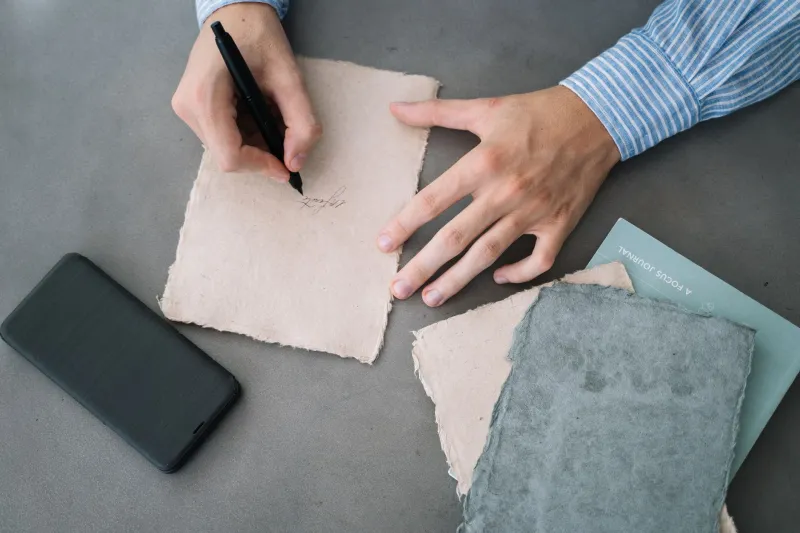
The premise is almost insultingly simple. When a new idea shows up — and Harada says they arrive "like spam email, constantly and usually unwanted" — he writes it out on one sheet of standard A4 paper. What the project is. Why it matters to him. What finished looks like. Roughly what it would cost in time and money.
If the idea genuinely fits — the whole thing, honestly described, no shoving — it moves to a shortlist. If it spills onto a second page, or he finds himself writing "and then also" more than twice, it goes in the shoebox.
That's it. No scoring system. No spreadsheet. No app.
"The paper doesn't care about my enthusiasm," Harada told me, shrugging. "It only cares whether I actually know what I'm making."
What a Real One-Sheet Looks Like
He pulled out an accepted one to show me: a zine project from 2019 about the vending machines of Nakano. Four short paragraphs. A deadline scrawled in the margin — six weeks. A materials list that fit in one line. That project shipped on time and sold out of a hundred copies at a small press fair.
Then came the rejections, and this is where it gets interesting. One sheet from 2021 described an ambitious animated short — and the back of the page was covered too. "That's the tell," Harada said. "When the idea needs a second page, it's usually because I'm in love with the feeling of the project, not the project."
Another rejected sheet was barely half full — an idea so thin that describing it honestly exposed that there was nothing there. Both failure modes, over-stuffed and under-baked, get caught by the same filter.
Why This Hits Different for American Creatives
If you've spent any time on the productivity side of the internet, you've seen the opposite approach. Notion dashboards. Quarterly creative OKRs. Ninety-day sprints. The whole hustle-culture apparatus treats every idea like it deserves a full business plan before you're allowed to make it — or worse, treats having ideas as the accomplishment.
Harada's filter runs the other direction. It's a barrier to entry, not a planning system. The one-sheet isn't a roadmap; it's a toll booth. And because it's analog — literally one physical page in one physical box — it can't grow scope creep the way a digital doc does. A Notion page can expand forever. A sheet of paper cannot.
There's also something quietly liberating about the shoebox. Rejected ideas aren't deleted; they're archived. Harada admits he rereads them sometimes, and a couple of one-sheets eventually got revived once he could describe them in a single page. The rule doesn't kill ideas. It just makes them wait until they're ready.
Try It This Week
You don't need a Tokyo studio to run this experiment. Grab actual paper — the physical constraint is the point. Take the project you've been circling for months and describe it completely on one page: what it is, why you care, what done looks like, what it costs.
If it fits, start it. If it doesn't, don't kill it — box it. Put it somewhere you'll see it again and move on to something that does fit.
The goal isn't fewer ideas. It's fewer half-started ones. As Harada put it while closing the shoebox: "A page that can't hold your idea is just telling you the idea isn't yours yet."