One Day, One Desk, One Very Surprised Fan: A Stranger's Day Inside Harada's Studio
The email arrived on a Tuesday, written in careful English with a slightly formal Japanese politeness underneath: Congratulations. You won the studio visit. Please come to Koenji. Do not bring gifts.
Megan Torres, a graphic designer from Portland, Oregon, had entered the giveaway on a whim — a one-line form on haradamasayuki.com asking a single question: What would you want to see if you could spend one day here? Her answer, apparently, was the winning one: "The boring parts. Nobody ever shows the boring parts."
That answer turned out to be exactly right. Because what Megan got on her visit day wasn't a tour. It was a Tuesday.
The Door Opens at Whatever Time It Opens
Harada had warned her in advance: the studio doesn't run on a schedule, it runs on weather, coffee, and whatever page is fighting him that morning. Megan arrived at 10:15 to find the door unlocked and Harada mid-argument with a watercolor wash that wasn't behaving. He waved her in without stopping.
"That was the first surprise," she told us afterward. "No handshake, no 'welcome, let me show you around.' I was just... absorbed into the day. Like a new coworker nobody trained."
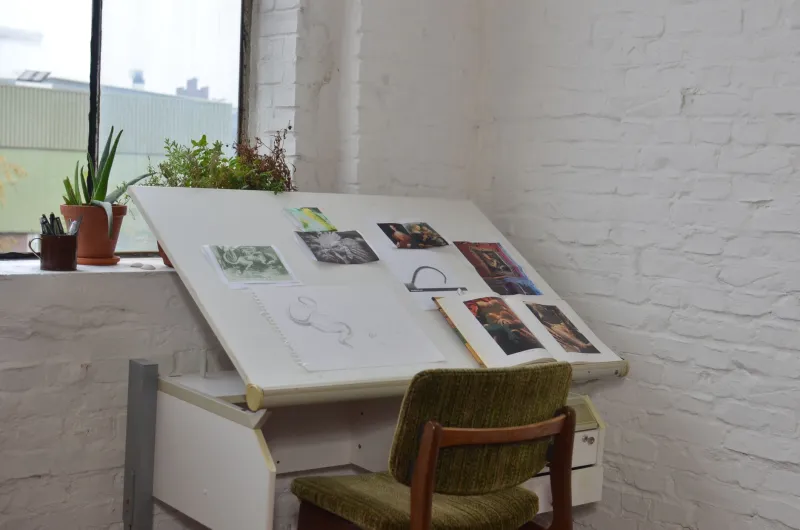
The studio itself will disappoint anyone expecting a shrine. It's small, warm, and cluttered in the way a working kitchen is cluttered — not messy, exactly, but clearly used. A drafting table by the window. A second, lower table covered in reference photos of Shitamachi alleyways. A wall of pinned sketches so dense it looks like shingles.
The Boring Parts, Delivered
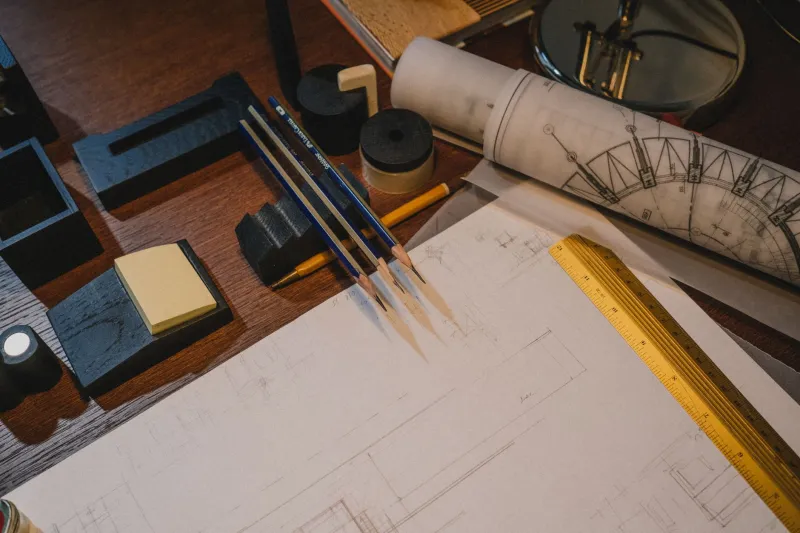
What Megan had asked for is what she got: the unglamorous rhythm of the work. Harada sharpened pencils. He mixed a gray, got it wrong, mixed it again. He spent forty-five minutes — she timed it — staring at a single panel before drawing one line.
"In Portland, I'd have posted that on Instagram as 'artist blocking.' He just called it 'the part before the part.'"
Around noon, he announced lunch, which meant walking two blocks to a soba shop where the owner clearly didn't ask questions. Over tempura, Megan asked the question every fan wants to ask: what should I do with my own work? Harada's answer, translated loosely from the Japanese he defaulted to: "Make the thing only you would make badly. Then keep making it until it's only yours."
She wrote it on a napkin. He made her throw the napkin away — "write it in your hand if it matters" — and she did, on the walk back.
The Moment That Wasn't on the Brochure
The afternoon held the day's genuine surprise. A neighbor, an older woman from the second floor, knocked and dropped off a plate of pickled plums, looked at Megan, decided she was trustworthy, and asked Harada to look at a drawing her granddaughter had made. He cleared the drafting table, spread the child's crayon picture out under the lamp, and gave it the same full, serious attention he'd given his own panel all morning.
"That," Megan said, "was the whole artist explained in one scene."
Why He Let a Stranger In at All
Harada doesn't do studio visits. This was the first, and possibly the last, which is why the giveaway felt like a fluke even to the people running the site. His reasoning, when pressed, was characteristically sideways: fans see finished work, and finished work lies. It looks inevitable. The only cure is showing someone the gray that got mixed wrong.
For US readers used to following creators through algorithmic feeds and press tours, the lesson lands hard. A creator's own website isn't just a portfolio — it's a door. Occasionally, if you're lucky and your answer is honest enough, it opens.
Megan flew home the next morning with a small sketch Harada made of her at the drafting table, and a rule she says she's kept since: do the boring parts on purpose.
The napkin, for the record, is gone. The words aren't.