Strike the Match, Start the Page: Inside the Scent Ritual That Opens Harada's Workday
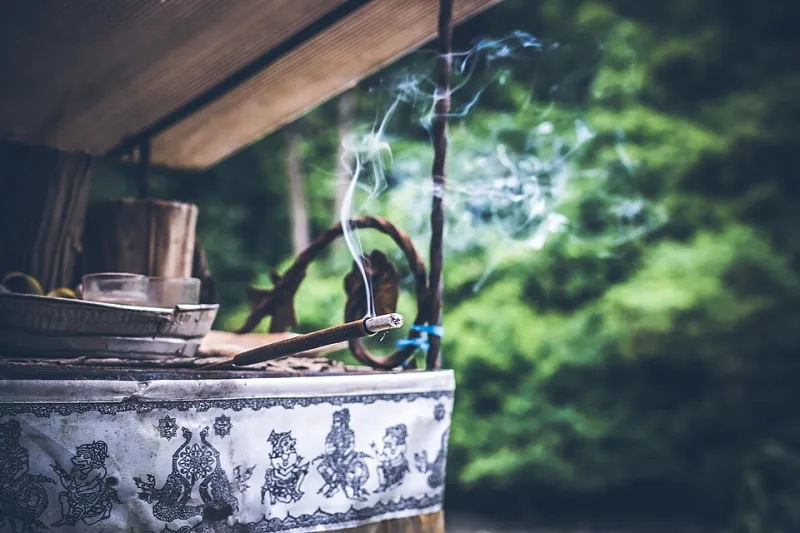
Photo: Artem Beliaikin belart84, CC0, via Wikimedia Commons
Ask Harada Masayuki what time he starts work and he'll give you an answer that sounds like a non-answer: "When the smell reaches the middle of the room."
He's not being mysterious for effect. Every drawing session in his Tokyo apartment studio begins the same way — a stick of the same inexpensive Japanese incense, the same brand he's bought from the same shop for going on twenty years, lit in a chipped ceramic holder near the window. The match strikes. The smoke curls. And somewhere in his head, a switch flips.
"The incense isn't about relaxation," he told me, waving away a thread of smoke. "It's a signal. My hands don't know what 'work' means until the room smells like the studio."
The Start Button You Can't See
American work culture loves the idea of rituals, but we usually make them visual or verbal — the same coffee mug, the same playlist, a pep talk in the mirror. Harada's approach is stranger and, honestly, more interesting: he treats scent as the opening bell.
There's real science stacked behind the superstition. Smell is wired directly into the brain's memory and emotion centers, bypassing the usual processing steps. That's why a whiff of cedar can drop you into your grandmother's hallway in half a second. Harada stumbled onto this accidentally in the '90s, when a neighbor gifted him a box of incense as a New Year's present. He lit it out of politeness, sat down to draw, and noticed something: the work came easier. The next morning, he lit it again on purpose.
Thirty years later, the ritual hasn't changed. Same brand. Same holder. Same spot by the window.
"If I travel for a show, I pack it," he says. "A hotel room in Los Angeles becomes the studio in about four minutes. Without it, I just sit there like a man waiting for a bus that isn't coming."
It's Not Just the Smoke
The incense gets the attention, but Harada is quick to point out that it's only one layer of the environment. His studio is a full sensory stack, assembled slowly and defended fiercely:
- The paper. He buys the same heavyweight stock from a supplier in Jinbōchō, and he'll open a fresh ream just to flip through the pages with his fingertips before starting a big piece. "The texture tells my fingers how hard to press," he says.
- The radiator. His old apartment heats with a rattling gas unit that clicks and hums in a specific rhythm. He recorded it once on his phone and played it back in a quiet hotel — "close, but wrong," he says, laughing.
- The light. One warm desk lamp, always from the upper left. Never overhead. Never daylight-balanced. The shadows in the room match the shadows on the page.
- The drink. Hojicha, lukewarm, in a mug with a hairline crack down one side. He drinks it slowly enough that it's usually cold by the second cup.
None of these objects is precious on its own. Together, they form a room that says one thing and only one thing: this is where the work happens.
Why Your Kitchen Table Feels Like a Kitchen Table
Here's the part that hits home for anyone trying to make things in a one-bedroom apartment or at the corner of the dining room table. Most of us work in multipurpose spaces, and multipurpose spaces send multipurpose signals. Your brain associates that chair with email, with dinner, with folding laundry — everything except the thing you're trying to make.
Harada's fix isn't a bigger studio. It's a smaller idea: give the space a sensory signature it has only during work hours. You don't need a Tokyo apartment or a twenty-year incense habit. You need one consistent cue that appears when you start and disappears when you stop.
Build Your Own Ritual Environment
If you want to steal Harada's method (and he'd tell you to), here's the loose guide:
- Pick one scent and commit. Incense, a candle, even a specific citrus essential oil. The key is repetition — same scent, every session, no exceptions. It should be something you don't smell at any other time.
- Choose a sound. A fan, a specific album, rain sounds, the hum of a space heater. It doesn't have to be pleasant; it has to be consistent.
- Fix the light. One lamp, one angle, every time. Don't chase the sun around the room.
- Anchor with an object. A mug, a stone, a lucky pencil — something you touch at the start of every session the way a golfer settles a grip.
- Keep it cheap and repeatable. Harada's entire setup costs less than a nice dinner out. The ritual's power comes from repetition, not price tags.
The whole thing takes maybe a week to feel normal and about a month to become automatic. After that, you'll notice something odd: you'll sit down, catch the scent, and feel the day's resistance start to melt before you've done anything at all.
One Match, Then the Work
Near the end of my visit, I asked Harada what would happen if the incense shop closed down — if the exact brand he'd used for two decades simply vanished.
He thought about it longer than I expected.
"I'd grieve for a while," he said. "Then I'd pick a new one, and in ten years it would be the same thing. It was never about that particular smell. It's about the promise you make to yourself every time you light it. Now we work."
Then he struck the match, and the interview was over. The page was waiting.